
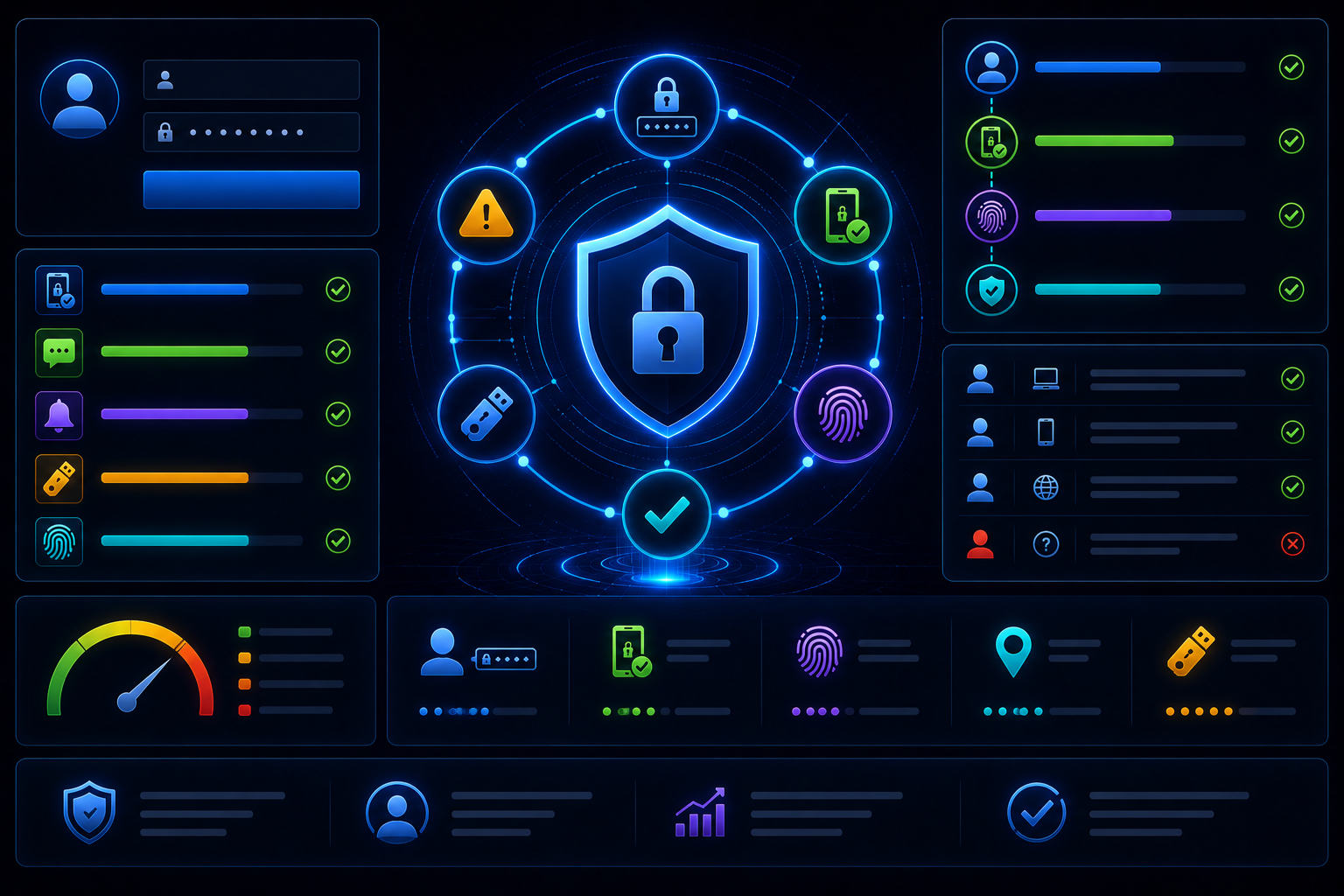
XeneX MFA adds an extra layer of protection by requiring users to provide multiple forms of verification, reducing the risk of unauthorized access even if one factor is compromised.
Traditional single-factor authentication (password-only) is susceptible to credential theft through methods like phishing, keylogging, or data breaches. XeneX MFA makes stolen credentials insufficient for unauthorized access.
Users often reuse passwords across multiple accounts. If one account is breached, attackers could gain access to other accounts. XeneX MFA mitigates this risk by requiring an additional factor for access.
Even if an attacker attempts to guess a user's password, XeneX MFA prevents access without the additional verification factor, making brute-force attacks much less effective.
XeneX MFA makes it more difficult for attackers to impersonate users through phishing attacks, as they would need more than just a stolen password to gain access.
Many regulatory standards and industry regulations (such as GDPR, HIPAA, and PCI DSS) require strong authentication measures. XeneX MFA helps organizations meet these requirements.
XeneX MFA provides an additional layer of security against insider threats, where authorized users might misuse their access privileges.
For remote workers accessing corporate systems, XeneX MFA ensures that access is secure even when users are outside the company network.
XeneX MFA safeguards sensitive information, preventing unauthorized access to critical data, financial information, personal records, and intellectual property.
While there might be initial setup costs, the potential costs of data breaches, loss of intellectual property, or reputation damage far outweigh the expenses associated with implementing XeneX MFA.
XeneX MFA confirms the identity of users more effectively, making sure that only authorized individuals can access systems and data.
XeneX MFA solutions often provide user-friendly experiences, such as push notifications or QR code scanning for mobile authentication apps, enhancing user adoption.
XeneX MFA solutions offer various authentication methods, allowing organizations to choose the most appropriate methods for their users and use cases.
XeneX MFA solutions offer centralized management, making it easier for IT teams to configure, monitor, and maintain authentication processes.
XeneX MFA methods, like biometrics, eliminate the need for passwords entirely, improving user experience and reducing password-related risks.
Organizations can provide secure remote access to partners, contractors, and vendors while ensuring their identities are verified.
Your organization reduces the risk of unauthorized access by strengthening login security beyond just usernames and passwords. XeneX supports this by implementing MFA that adds multiple layers of verification, significantly reducing the likelihood of account compromise even if credentials are stolen or exposed.
Your organization can enhance security by combining different authentication factors such as passwords, mobile verification codes, biometrics, and device-based checks. XeneX helps design and deploy the right mix of MFA methods—including something you know, have, are, or do—based on your security needs, usability requirements, and risk profile.
Your organization is vulnerable when attackers obtain passwords through phishing, reuse, or breaches. XeneX MFA reduces this risk by requiring an additional verification factor that prevents unauthorized access even if credentials are compromised, making stolen passwords insufficient on their own.
Your organization must meet industry and regulatory standards that require strong authentication controls. XeneX helps ensure compliance with frameworks such as GDPR, HIPAA, and PCI DSS by implementing and managing MFA solutions that strengthen identity verification and access security.
Your organization needs secure access for employees, contractors, and vendors working remotely or across distributed environments. XeneX enables secure remote access by enforcing MFA across all user types, ensuring identity verification regardless of location, device, or network.
Your organization benefits from centralized visibility and control over authentication systems. XeneX partners with leading providers like Microsoft and Google to deliver end-to-end MFA solutions, including deployment, monitoring, alerting, and reporting, while ensuring flexibility, ease of use, and continuous security improvement.
