
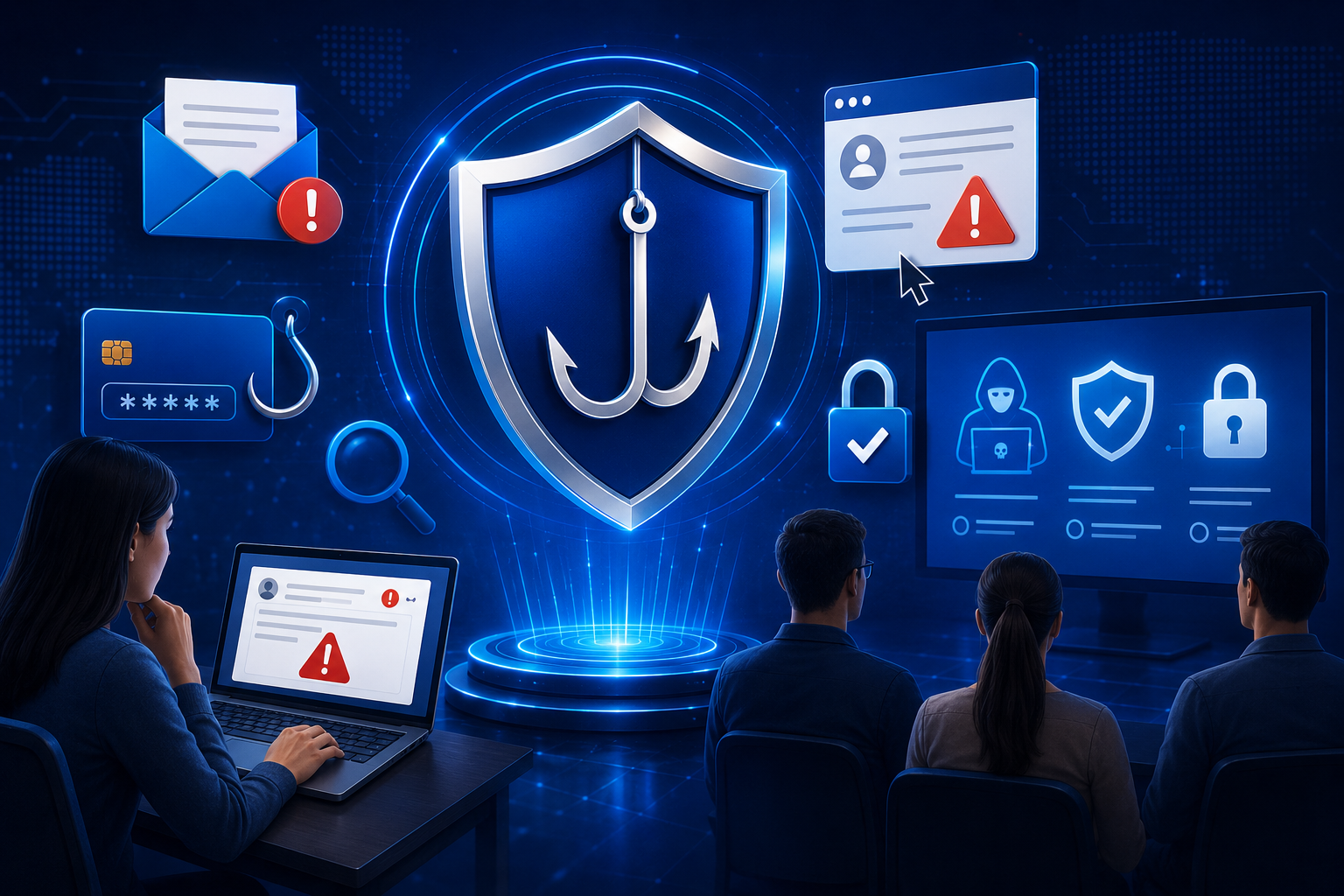
XeneX Phishing awareness and training programs foster a security-conscious culture within organizations and empower individuals to be the first line of defense against phishing attacks. They play a crucial role in reducing the likelihood of successful phishing attempts and enhancing overall cybersecurity posture.
Phishing is a common entry point for cyberattacks. By educating users about phishing risks and tactics, organizations can significantly reduce the likelihood of falling victim to such attacks.
Properly trained users are less likely to click on malicious links, open suspicious attachments, or provide sensitive information to attackers, leading to a decreased success rate for phishing attempts.
Training programs foster a security-conscious culture where employees actively participate in safeguarding the organization's assets and data.
Educated users are empowered to recognize and respond appropriately to phishing attempts, reducing the dependency on IT teams to identify and mitigate threats.
Well-trained users can identify phishing emails quickly, allowing organizations to respond promptly, investigate the source, and prevent potential breaches.
Users who are aware of phishing tactics can provide valuable insights during incident response efforts, helping to contain and mitigate the impact of attacks.
Many regulations and standards require organizations to implement security awareness programs. Phishing training helps organizations meet these compliance requirements.
Preventing successful phishing attacks eliminates the potential costs associated with data breaches, loss of intellectual property, and reputational damage.
Phishing attacks often aim to steal sensitive data. Training users to identify phishing attempts reduces the risk of data breaches and the loss of confidential information.
Clients, partners, and stakeholders trust organizations that prioritize cybersecurity and protect their sensitive information.
With the rise of remote work, employees need to be vigilant against phishing attacks even outside the corporate network. Training helps them recognize threats regardless of their location.
Regular training updates keep users informed about evolving phishing tactics, ensuring that their knowledge remains up to date.
Training programs can be tailored to specific industry challenges and organizational needs, making them more effective.
Phishing awareness training often includes advice on creating strong, unique passwords and avoiding password sharing.
Organizations known for having strong security measures in place are more likely to attract and retain customers, partners, and skilled employees.
Phishing training is one component of a holistic cybersecurity strategy that enhances an organization's overall resilience against cyber threats.
XeneX phishing awareness and training is a structured cybersecurity education program that teaches employees how to recognize, avoid, and report phishing attacks. Phishing is one of the most common entry points for cyberattacks, where attackers use social engineering to trick users into revealing sensitive information such as login credentials or financial details.
By equipping employees with the knowledge to identify suspicious emails, links, and attachments, XeneX phishing training significantly reduces the likelihood of a successful attack and helps build a security conscious culture across your entire organization
XeneX phishing training combines education and practical exercises to prepare employees for real world threats. This includes workshops and online training sessions that cover common phishing tactics, how to spot red flags in emails such as generic greetings, misspelled words, and suspicious links, and how to verify requests through alternative communication channels.
A key component of the program is simulated phishing exercises, where realistic phishing scenarios are used to test employees and measure the organization's overall susceptibility. Results are then used to refine training content and address specific areas of vulnerability.
XeneX phishing training teaches employees to watch for a range of warning signs including generic or unusual greetings, misspelled words, unexpected attachments, and URLs that do not match the supposed sender's domain. Employees are also trained to be cautious of emails that create a false sense of urgency or pressure them into taking immediate action such as clicking a link or providing personal information.
Practical techniques such as hovering over links to preview the actual destination URL and verifying suspicious requests by contacting the sender through a separate channel are also core parts of the training curriculum.
XeneX phishing training delivers measurable benefits across security, compliance, and business operations. Trained employees are significantly less likely to click on malicious links or share sensitive information, reducing the success rate of phishing attempts and the associated costs of data breaches, lost intellectual property, and reputational damage.
The program also supports regulatory compliance, reinforces strong password hygiene, improves incident response capabilities, and builds trust with clients and partners who value organizations that take cybersecurity seriously. For remote workforces in particular, the training ensures employees remain vigilant against phishing threats regardless of their location.
Yes. XeneX phishing training programs are designed to be fully customizable to address the specific challenges, risks, and regulatory requirements of your industry. Training content can be tailored to reflect the types of phishing scenarios your employees are most likely to encounter, making the program more relevant and effective.
The program is also built for continuous improvement. Simulation results and user feedback are regularly analyzed to update training materials and keep employees informed about the latest phishing tactics as attackers continue to evolve their methods over time.
