
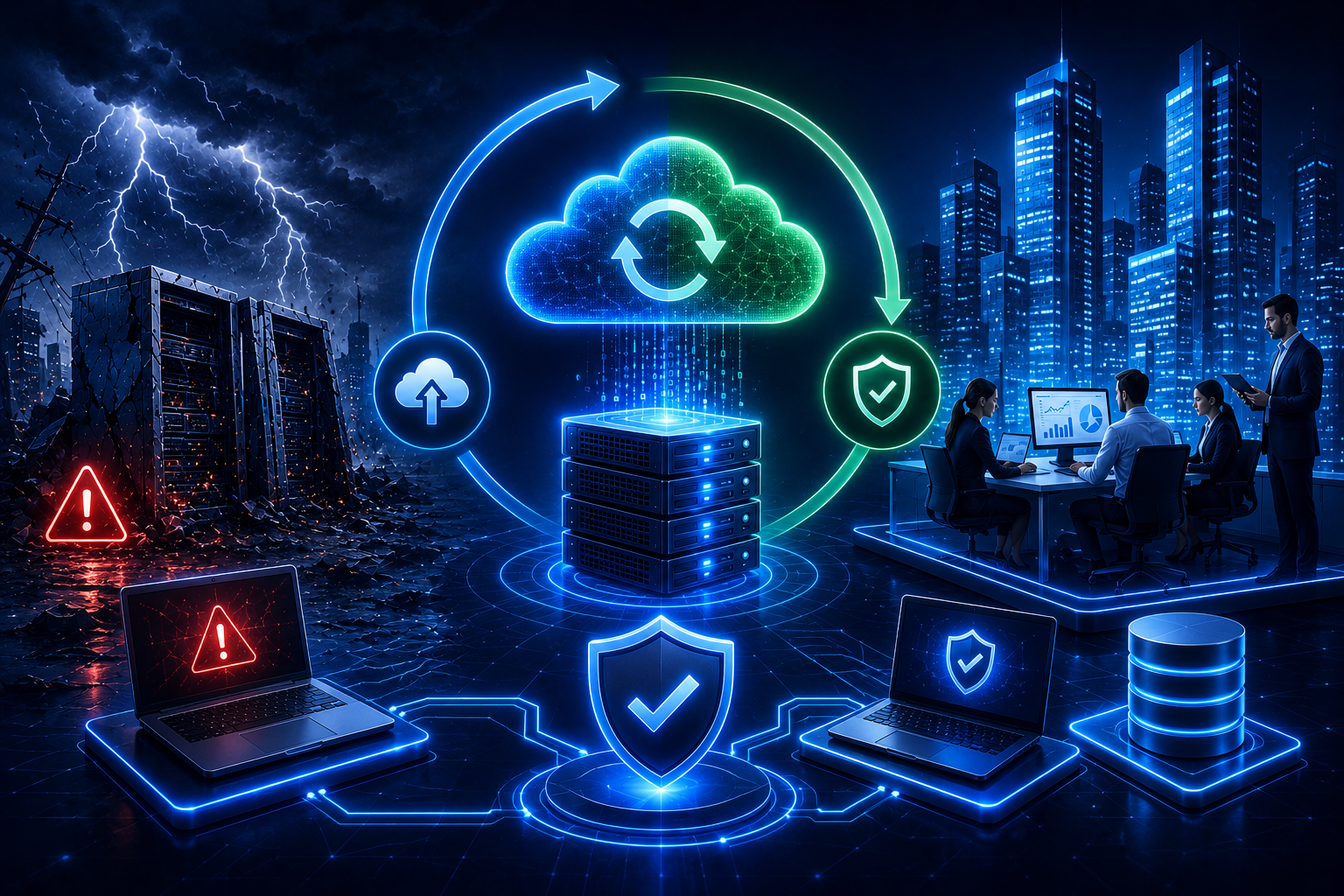
XeneX has a systematic approach to implementing effective disaster recovery (DR) and business continuity (BC) to ensure that your organization can respond to disruptions and maintain operations.
Implementing XeneX’s disaster recovery (DR) and business continuity (BC) strategies can offer numerous benefits to organizations, helping them mitigate risks, reduce downtime, and maintain their operations even in the face of unexpected disruptions.
The benefits of XeneX’s disaster recovery and business continuity implementation go beyond just recovery from specific events. They contribute to the overall resilience, stability, and long-term success of an organization by ensuring that it can navigate through disruptions and continue to provide value to its customers and stakeholders.
Implementing XeneX’s disaster recovery (DR) and business continuity (BC) strategies can offer numerous benefits to organizations, helping them mitigate risks, reduce downtime, and maintain their operations even in the face of unexpected disruptions. Here are some key benefits of XeneX’s DR and BC implementation:
XeneX’s DR and BC plans ensure that critical systems, processes, and data can be quickly restored, reducing the downtime experienced during a disaster. By having XeneX’s backups and redundancy in place, organizations can minimize data loss, ensuring business operations continue with minimal interruption.
XeneX’s DR and BC strategies build resilience into an organization's operations, enabling them to bounce back from disruptions more quickly and effectively. The ability to adapt and recover can help maintain customer trust and loyalty, even during challenging times.
Many industries have regulatory requirements for data protection and business continuity. Implementing XeneX’s DR and BC measures can help organizations meet compliance standards and manage risks, avoiding potential legal and financial consequences.
A well-prepared organization can continue to provide products and services to customers during and after a disaster, demonstrating reliability and commitment. Maintaining operations in the face of adversity can boost confidence among customers, investors, and stakeholders.
Downtime and data loss resulting from disasters can lead to significant financial losses. XeneX’s DR and BC planning helps reduce financial impact by minimizing revenue loss, avoiding penalties, and preventing the costs associated with prolonged downtime.
With XeneX’s well-defined recovery processes, organizations can expedite the recovery of critical functions, reducing the time it takes to resume normal operations.
Organizations with XeneX’s effective DR and BC plans are better equipped to handle disruptions and can continue to provide services when competitors might struggle. This can position the organization as a reliable and trustworthy partner in the eyes of customers and partners.
XeneX’s DR and BC plans also take into account the safety and well-being of employees. By having protocols in place, organizations can ensure the safety of their workforce during emergencies and disasters.
A communication plan within the DR and BC strategy ensures that all stakeholders are kept informed about the situation and recovery progress. Clear communication helps maintain transparency and reduces confusion during challenging times.
Implementing XeneX’s DR and BC measures requires a thorough understanding of an organization's processes and systems. This understanding can facilitate better planning for future growth and scalability.
XeneX disaster recovery (DR) and business continuity (BC) is a systematic approach to ensuring your organization can respond to unexpected disruptions and maintain critical operations with minimal downtime. DR focuses on restoring systems and data after an incident, while BC ensures that essential business functions continue to operate throughout and after a disruption.
Whether the threat is a cyberattack, natural disaster, power outage, or vendor failure, having a XeneX DR and BC strategy in place means your organization is prepared to recover quickly, protect its data, and continue delivering value to customers and stakeholders without prolonged interruption.
XeneX takes a structured, step by step approach to DR and BC planning. It begins with a risk assessment and business impact analysis to identify potential threats and prioritize the critical functions and systems that need to be recovered first. From there, XeneX develops comprehensive DR and BC plans that define recovery procedures, assign responsibilities, and establish clear communication protocols.
The process also includes assembling a cross functional team with authority to act during a crisis, implementing data backups and redundancy measures, defining recovery time objectives and recovery point objectives, and conducting regular testing through drills and simulation exercises to validate the plans before they are ever needed.
XeneX minimizes downtime by designing IT infrastructure with redundancy and failover mechanisms, so that if one system goes down, operations can shift to a backup environment with minimal delay. Regular data backups are stored both on site and off site, protecting against physical damage and ensuring data remains accessible regardless of where or how a disruption occurs.
XeneX also leverages cloud services for critical applications to enable rapid failover, and establishes clearly defined recovery time objectives so that every team member knows exactly how quickly systems need to be restored. These measures work together to keep data loss and operational disruption to an absolute minimum.
Many industries are subject to regulatory requirements around data protection, operational resilience, and business continuity. XeneX DR and BC implementation helps organizations meet these compliance standards by ensuring that proper backup, recovery, and documentation procedures are in place and can be demonstrated during audits.
Beyond compliance, XeneX's approach to risk management includes regular plan reviews, vendor and supplier assessments, and cybersecurity measures such as firewalls, intrusion detection systems, and access controls. This reduces the legal, financial, and reputational risks associated with being unprepared for a disruption.
XeneX DR and BC delivers benefits that extend well beyond simply recovering from a specific event. Organizations benefit from faster recovery times, reduced financial impact from downtime and data loss, improved customer and stakeholder confidence, and a competitive advantage over organizations that are less prepared. Employees also benefit from clearly defined safety protocols during emergencies.
Over the long term, XeneX DR and BC planning builds organizational resilience, supports future growth and scalability, and ensures that clear communication is maintained with all stakeholders during and after a disruption. The result is a more stable, trustworthy, and operationally sound organization that is equipped to navigate uncertainty with confidence.
